Fault
Inverter Welder Input Short Diagnosis with a Series Lamp Limiter
A practical fault page for using a series lamp limiter to detect input shorts and power-stage shorts before an inverter welder destroys fuses, breakers or replacement IGBTs.
What a series lamp limiter is diagnosing
A lamp limiter is not a repair tool; it is a controlled current-limiting test used before a suspect inverter welder is allowed to draw unrestricted mains current. In a ZX7-type inverter, the first power-up after a reported short should not be done directly from the wall. A filament lamp in series with the 220V input gives the technician a visual current indication and limits destructive fault current long enough to observe the fault state.
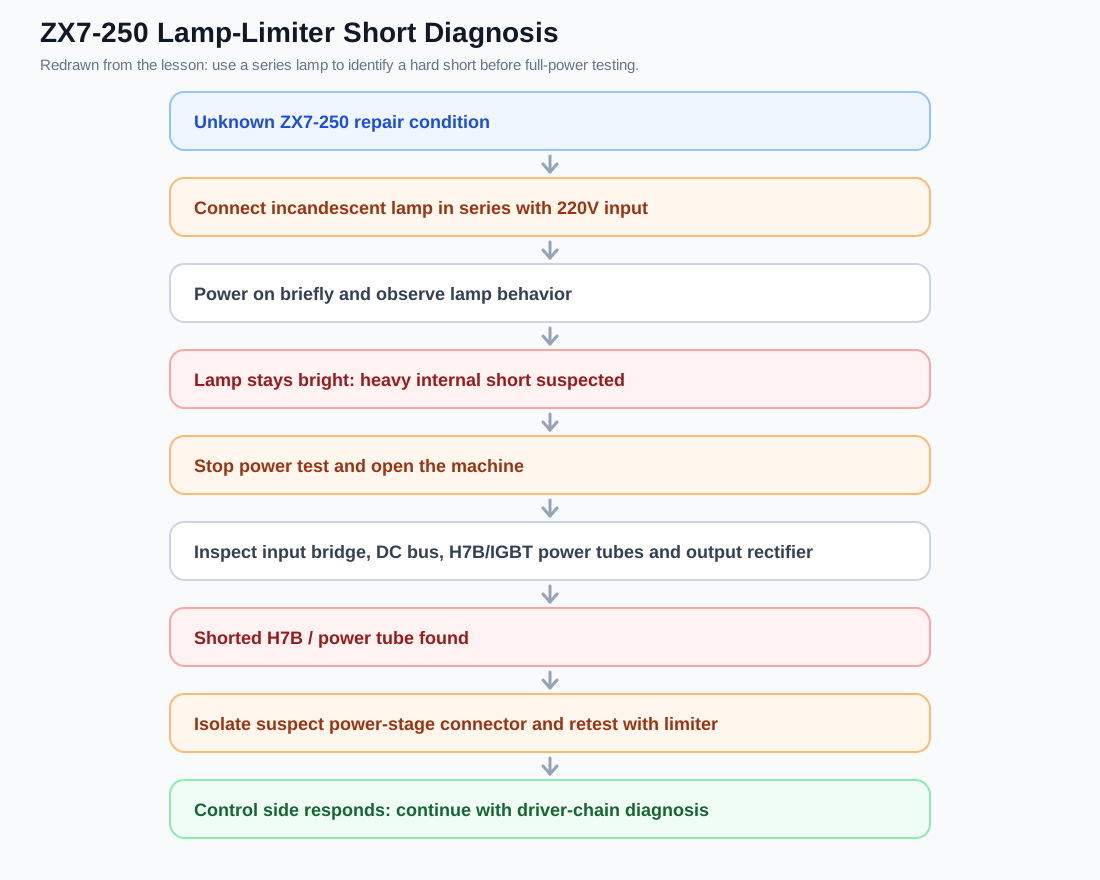
The key interpretation is simple but important. A short flash followed by dimming usually means the input capacitors charged and the machine did not remain under heavy load. A lamp that stays bright means the welder is drawing excessive current. At that point, the correct action is not to continue switching the machine on; the correct action is to isolate the short path.
Technical short-diagnosis flow
| Lamp behavior | Likely meaning | Action |
|---|---|---|
| Brief flash, then dim | Normal capacitor charging or no heavy short under the current test condition | Continue with low-voltage rail checks and staged diagnosis. |
| Bright and stays bright | Input bridge, DC bus, power tube or auxiliary supply may be shorted | Stop direct testing; isolate sections before powering again. |
| No light and no machine response | Open input path, fuse, switch, NTC, wiring, or dead auxiliary supply | Check input continuity and front-end supply path. |
| Pulsing or unstable brightness | Intermittent load, relay action, charging restart, or protection cycling | Record the pattern and isolate relay / auxiliary / bus sections. |
Section-by-section isolation order
The useful workflow is to split the welder into sections. Start with the input path and rectifier bridge, then the bulk DC bus, then the inverter power devices, then the secondary rectifier, and finally the auxiliary supply and control board. A direct short across the bus, a shorted IGBT/H7B device, or a shorted bridge rectifier can all make the lamp stay bright. The lamp only tells you that current is excessive; it does not name the failed component.
| Section | What to check with power removed | Reason |
|---|---|---|
| Input bridge / rectifier | Diode-mode readings, short across AC/DC terminals | A shorted bridge can load the lamp before the inverter section operates. |
| Bulk DC bus | Resistance and short check across capacitors after discharge | A hard short here points to power device or capacitor/front-end failure. |
| Power tubes / IGBTs / H7B devices | Collector-emitter or main terminal short; gate damage; cracked package | A shorted device can place the 500V-class bus under fault. |
| Output fast-recovery rectifiers | Diode-mode symmetry and short check | A secondary short can overload the inverter and destroy new devices. |
| Auxiliary supply | Controller IC, startup resistor, rectifier and shorted rail | A shorted auxiliary rail can also keep the input lamp bright or cycling. |
Using the lamp limiter without damaging evidence
Do not use the lamp as permission to repeatedly energize a shorted machine. The lamp limits current but still allows heat and stress. Every bright-lamp test should have a purpose: confirming that a section is still shorted, proving that an isolated connector changes the result, or checking whether low-voltage control activity returns after the heavy fault path is removed.
When a connector is unplugged and the lamp behavior changes from bright to normal, label the connector and the section it feeds. That change is valuable evidence. It may indicate a shorted power tube, a shorted rectifier module, a damaged driver daughterboard, or a local supply short. Do not reconnect everything blindly after replacing one component.
ZX7-250 case-specific notes
In the ZX7-250 H7B case, the bright lamp leads to visual inspection, an output diode-mode check and then a power-device short check. The failed H7B device is not treated as the entire diagnosis. The repair path continues into control supply and driver checks because the machine is a previously repaired unit and repeated power tube damage is rarely a pure component-quality issue.
- Record the lamp behavior before and after isolating the suspected power-stage plug.
- Confirm output rectifier readings before replacing the power tube.
- Check the +25V / -25V and regulated rails after the hard short has been isolated.
- Do not install new IGBTs or H7B devices until driver-chain health is credible.