Circuit
ZX7-250 Gate-Drive Transformer and 3846 Driver Primary Checks
A WelderData board-level circuit reference for checking the ZX7-250 PWM driver output, transformer primary network, four isolated gate-drive branches and small RC parts after IGBT, MOSFET or H7B power-device failure.
Database summary
This WelderData circuit record describes the ZX7-250 gate-drive path as a complete repair chain, not a single transformer check. The path begins at a 3846-style PWM output stage, passes through a small primary-side driver section, then into a gate-drive transformer. The transformer secondary side provides isolated drive energy to multiple power-device branches.
The important repair point is that a repeated power-device failure can start before the visible IGBT or MOSFET. A shifted 102 capacitor, a damaged 22Ω resistor, a weak discharge/damping path, a failed primary-side driver device or an uneven secondary branch can all make a replacement device fail again. WelderData therefore treats the driver primary network and the four output branches as one diagnostic system.
Technical 3846 driver-primary RC network
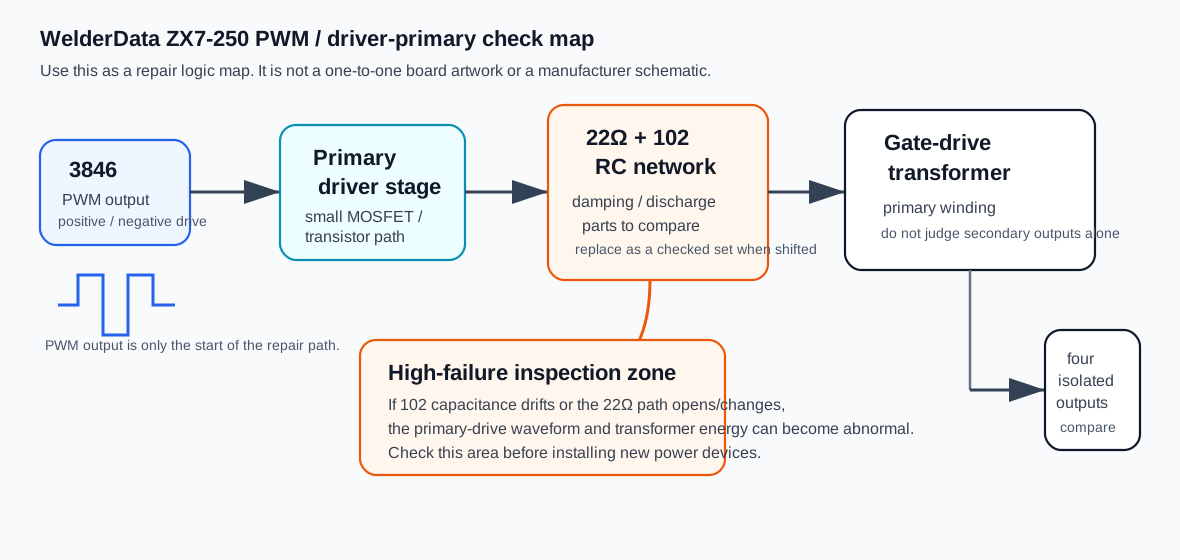
The 3846 output is not the welding output and it is not the final gate drive by itself. It is the command source for the small driver stage. During alternating drive periods, the primary-side driver path pushes current through the small gate-drive transformer primary. The secondary side then produces isolated drive pulses for the power-device branches.
Because the primary path controls the energy delivered into the transformer, small parts around this area matter. A 102-marked capacitor with reduced capacitance or a 22Ω resistor that has shifted, opened, overheated or cracked can change the discharge and damping behavior of the primary network. That can distort the drive energy before it reaches the secondary branches.
Four-output driver transformer check
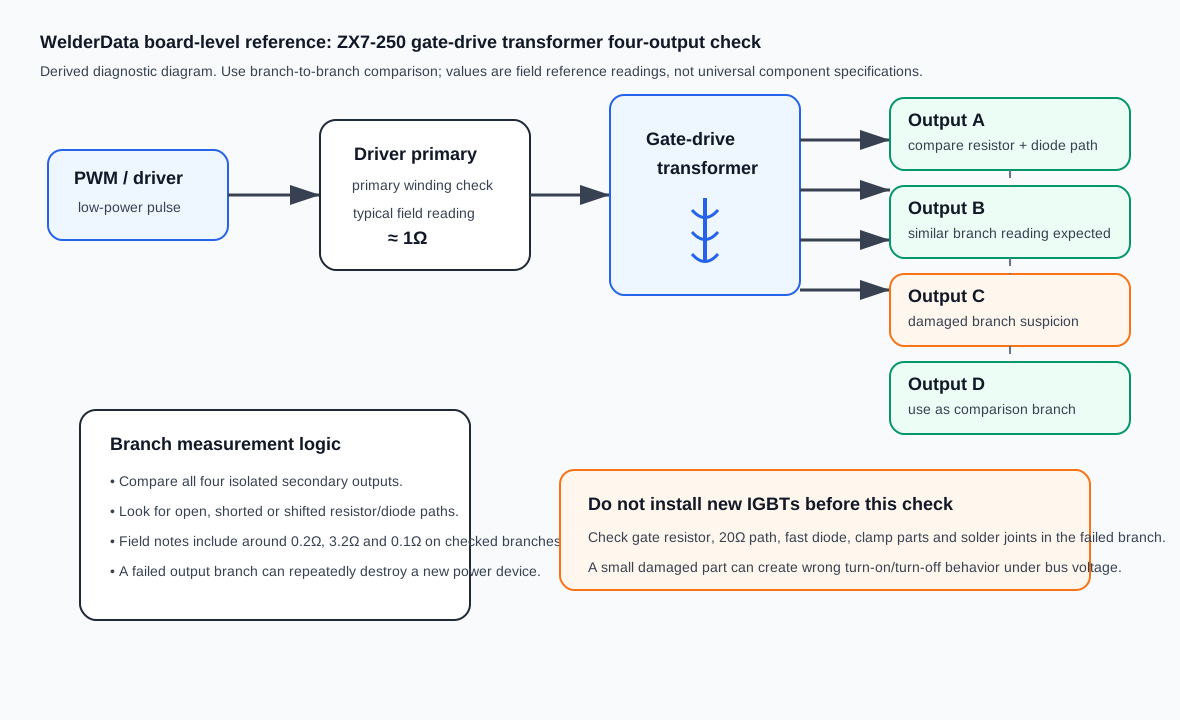
In this board family, the driver transformer has one primary drive path and four comparable output branches. Each branch belongs to one power-device gate path. A damaged branch can leave one device switching slowly, stuck, weakly driven or incorrectly clamped. That condition can destroy a replacement device even when the new device itself is good.
Primary-side parts that must not be skipped
| Check area | Why it matters | WelderData repair action |
|---|---|---|
| 3846 PWM output | Starts the positive and negative drive sequence into the primary driver stage. | Do not judge the transformer or IGBT branch until the PWM output path is logically present and not held off by a protection condition. |
| Primary-side driver transistor / MOSFET | Switches current through the small driver transformer primary. | Check for short, open, overheated solder and abnormal gate/base control parts. |
| 22Ω resistor path | Forms part of the primary damping, discharge or shaping network. | Measure it out of suspicion when repeated tube failure occurs; compare same-position parts where available. |
| 102 capacitor | Small capacitor value drift can change spike absorption, discharge timing or waveform damping. | Check capacitance and leakage; replace the matching network parts when the value is uncertain or heat-stressed. |
| Gate-drive transformer primary | Transfers drive energy to isolated secondary outputs. | Around one ohm can be a field reference on this board family, but the reading must be interpreted together with the surrounding RC path. |
Field-reference readings and branch comparison
| Check area | Observed field reference | How WelderData uses the reading |
|---|---|---|
| Driver primary winding | Around 1Ω may be normal on this board family | Confirms the primary is not obviously open. A shorted or burned primary still requires comparison and visual inspection. |
| Secondary output branches | Some branches may read around 0.2Ω, 3.2Ω or 0.1Ω depending on meter polarity and connected parts | Use the readings comparatively. A single branch that differs sharply from its matching branches is more meaningful than an isolated number. |
| Gate resistor area | 5.1Ω and 20Ω resistors appear in damaged branch patterns | Measure against the same parts in a known-good branch and check for heat damage or lifted solder. |
| High-speed diode | One failed branch may include a damaged fast diode | A shorted or open diode can change gate charge/discharge behavior and cause repeated tube failure. |
The values above are handled as WelderData field references, not universal service specifications. Different boards, meters and in-circuit paths can shift readings. The reliable point is branch symmetry, continuity logic and whether the damaged branch differs from the other three.
Repair workflow
- Discharge the DC bus and confirm that the machine is safe to measure.
- Remove or isolate the shorted power device so it does not hide the real driver-branch reading.
- Check the 3846 output path and primary-side driver device for obvious short, missing drive or protection lockout.
- Measure the 22Ω resistor path and the 102 capacitor network near the primary driver section.
- Measure the driver transformer primary winding and inspect solder joints.
- Measure each of the four secondary output branches in the same meter range and polarity.
- Compare the matching 5.1Ω resistor, 20Ω resistor, high-speed diode and clamp/damping parts in each branch.
- Repair the abnormal primary or secondary path before installing any new power devices.
- Restart the machine only with current limiting and staged bus testing.
Why the 102 capacitor and 22Ω resistor are treated as a set
When a power tube has exploded, the nearby low-cost parts may be electrically stressed even if they do not look destroyed. A 102 capacitor can lose effective capacitance, and a 22Ω resistor can drift or open under surge stress. If only the visibly blown tube is replaced, the altered primary-drive waveform may damage the new tube again. For this reason WelderData records this network as a pre-replacement check item.
The practical repair stance is conservative: if the board has repeated power-device failure, and the primary-side RC network has seen heat or surge stress, check or replace the paired parts rather than changing only one visible component.
Why a meter may show only a jumping signal
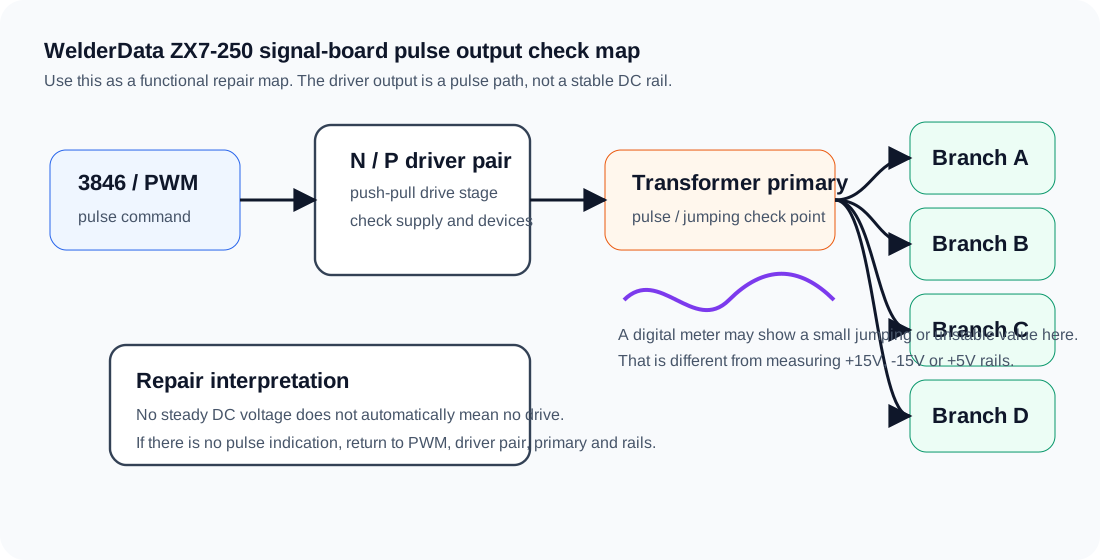
The gate-drive transformer primary is not a regulated DC output. It is a switching path driven by the PWM stage and the small primary-side driver pair. A standard digital multimeter may not lock onto a stable number at this point. It may show a small jump, a drifting value or a brief response when the driver is active.
WelderData uses this as a field check, not as a replacement for an oscilloscope. The useful question is whether there is any sign of pulse activity after the control rails and protection inputs are confirmed. A completely dead indication points the repair back toward the 3846 output, driver pair, primary winding, supply rails or protection lockout. A small jumping indication supports moving forward to four-branch comparison and current-limited power-stage testing.
Gate-drive branch comparison table
When one IGBT / H7B device fails, the driver branch feeding that device must be compared with the other branches. This is a practical field method for boards where the four output branches are expected to be similar.
| Check point | Expected comparison | Fault clue | Next action |
|---|---|---|---|
| Transformer primary winding | Low resistance, not open, not a hard short | Open primary, burned track or abnormal low reading | Repair the primary drive path before secondary checks |
| Four secondary output branches | Branches should be broadly symmetrical | One branch reads much lower or higher than the others | Inspect gate resistor, fast diode, clamp diode and local track damage |
| Gate resistor / small series resistor | Same design value as matching branches | Open resistor, charred resistor, changed value | Replace as a branch set where heat damage is visible |
| Fast diode / clamp path | Comparable diode-mode behavior between branches | Shorted or open diode, reverse reading differs strongly | Repair before installing a new power device |
| Primary-side 102 capacitor and 22Ω path | Damping / discharge network not leaky, open or burned | Repeated failure after branches look similar | Move upstream to the 3846 output and primary RC network |
| Pulse / jumping indication | Meter may show instability rather than a stable DC value | No movement at all with rails and command present | Check PWM output, driver pair and transformer primary |
Field interpretation notes
A gate-drive transformer output is not a DC power rail. A handheld meter may not display a stable number at the driver-primary or secondary pulse path. Treat a small jumping indication as a rough pulse-presence clue only. If an oscilloscope is available, waveform quality is better evidence. If no pulse sign exists, move backward through the 3846-style output, the N/P driver pair, the primary winding and the low-voltage rails.
If a replacement IGBT fails immediately after installation, the failed part may only be the visible result. WelderData prioritizes branch comparison, primary RC checks, control-rail stability and staged power-up before any full-current test.
Related WelderData records
Related repair map
Follow the evidence path from symptom to measurement, circuit and repair case.