Wire-feed evidence
NBC Wire Feeder and Arc Instability Fault Routing
A practical fault route for NBC-style CO2/MIG machines when wire feed, arc sound, spatter, burn-back or welding voltage is unstable.
Start with the feed path before replacing boards
NBC arc instability often begins as a mechanical or feedback problem: wrong drive-roll groove, low pressure, liner blockage, sharp cable bend, worn contact tip, poor return lead or missing voltage feedback.
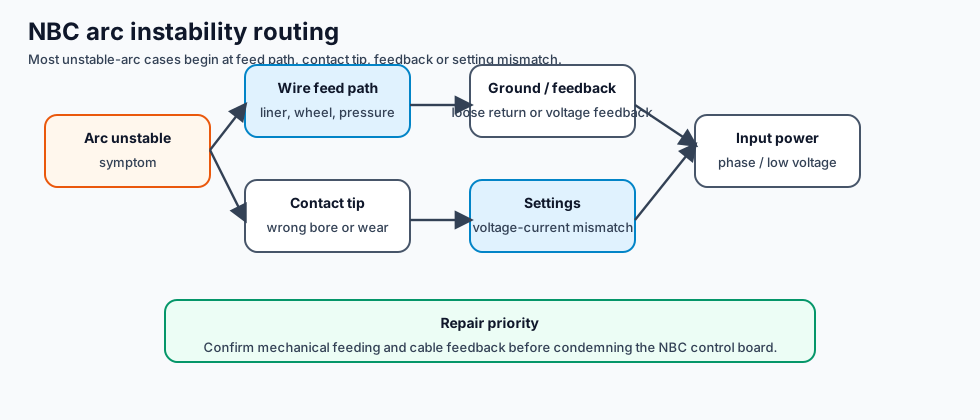
Fault routing table
| Symptom | High-value checks | Why it matters |
|---|---|---|
| Wire feed surges | Drive roll groove, pressure, liner, torch cable bend, motor brushes and feed board. | Uneven wire delivery changes current and arc length. |
| Arc unstable with spatter | Contact tip bore, voltage/current match, ground clamp and feedback lead. | The arc may be electrically unstable even when the power source is good. |
| No wire feed | Torch switch, control cable, feeder power and feed control board. | Do not condemn the power source until feeder control is proven. |
| Porosity or pits | Gas purity, flow, nozzle blockage, leak and wind. | Shielding loss can look like an electrical arc problem. |
| Low OCV / low welding voltage | Input phase, grid voltage, control board and feedback circuit. | Voltage evidence separates supply faults from feed-path faults. |
Diagnostic path
Symptom → unstable NBC arc. Evidence → feed regularity, contact tip, return/feedback, voltage-current match, input phase. Next pages → voltage-current setting and NBC model reference.