Board
ZX7-250 IGBT Driver, Signal Board and Control-Power Board Checks
A ZX7-250 board-level reference for separating auxiliary power, signal-board activity, protection feedback, gate-drive output and real current measurement.
Database summary
This WelderData board record covers the ZX7-250 signal, driver and control-power board as a combined diagnostic area. The board must be checked in layers: raw auxiliary supply, regulated rails, PWM/driver output, gate-drive transformer paths, protection inputs and panel-current behavior.
A working display or a changing current number does not prove that the rear power stage can deliver welding current. It only proves that part of the signal board is alive.
Signal-board independent 24V bench check
When the rear power stage has suffered an IGBT/MOSFET short, the signal board can be evaluated with an external 24V bench supply before reconnecting it to the damaged high-voltage section. This check is useful for confirming whether the display, current adjustment path and basic control logic respond without applying full mains power to a questionable power board.
Under this bench condition, a panel current value may appear and change as the potentiometer is adjusted. WelderData treats that as a control-board activity indicator, not a real welding-current measurement. Real current must be verified through the output path with a suitable shunt and load condition.
Board measurement zones
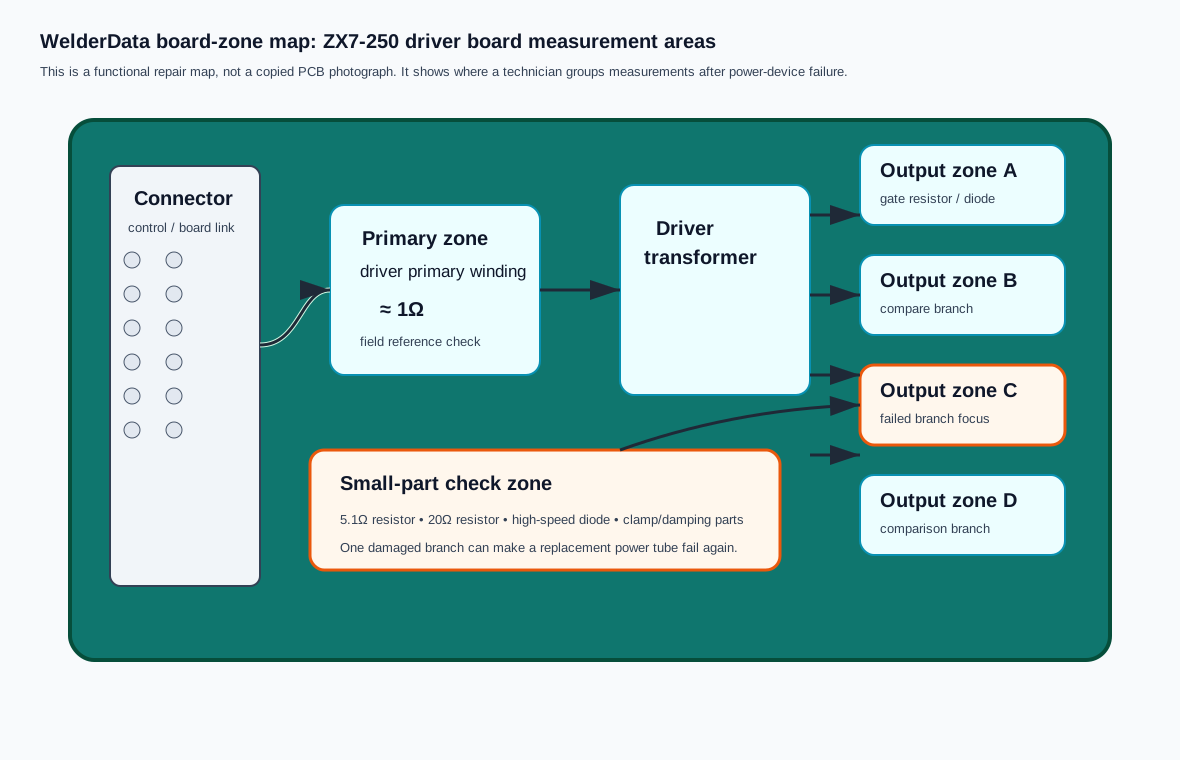
Signal-board pulse output check before installation
The ZX7-250 signal board can show useful evidence before the repaired power stage is fully reinstalled. After the control rails and protection inputs have been confirmed, the next question is whether the PWM and small driver pair are producing a pulse indication toward the gate-drive transformer primary.
This check must not be treated like a DC rail measurement. A technician may see only a small jumping value, a brief movement or an unstable meter indication at the driver-output point. WelderData treats that behavior as a possible pulse-presence indicator, not as a calibrated voltage value. A steady +15V or +5V rail should read as a stable supply. A transformer-primary drive point is different because it carries a switching signal.
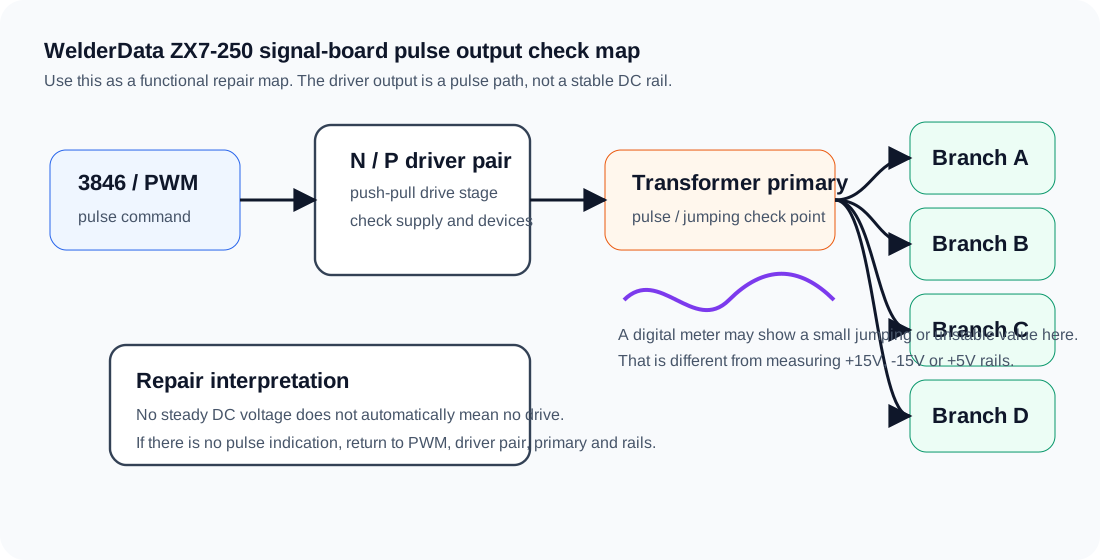
If a small pulse indication is present, the front control path, the driver pair and the transformer-primary route may be active enough to continue with branch comparison and staged power-up checks. If there is no movement at all, do not assume the rear power devices are the only problem. Return to the 3846 / PWM output, the driver pair, the primary winding, the +15V / -15V supplies and any protection signal that may be holding the output off.
Current feedback and protection section
The current transformer feedback path is used for overcurrent and short-circuit protection. The temperature switch path is used for thermal protection. These signals can block output even when the front panel remains active.
Before blaming the PWM controller or gate-drive transformer, check whether the protection input is active. If the board shows display activity but no output command reaches the driver stage, the protection path may be intentionally holding the control circuit down.
Diagnostic sequence
- Confirm the raw 24V or ±24V auxiliary feed before judging the control logic.
- Check regulated rails such as +15V, -15V and +5V where applicable.
- Confirm display and current-potentiometer response under safe board-level power.
- Check CT overcurrent feedback and thermal-switch input for active protection.
- Only then move deeper into PWM output, driver transformer and gate-drive branch diagnosis.
- Verify real output current separately with a rated shunt when the power stage is safe to test.