Circuit
Capacitor Discharge Stud Welder Charging and SCR Discharge Control Circuit
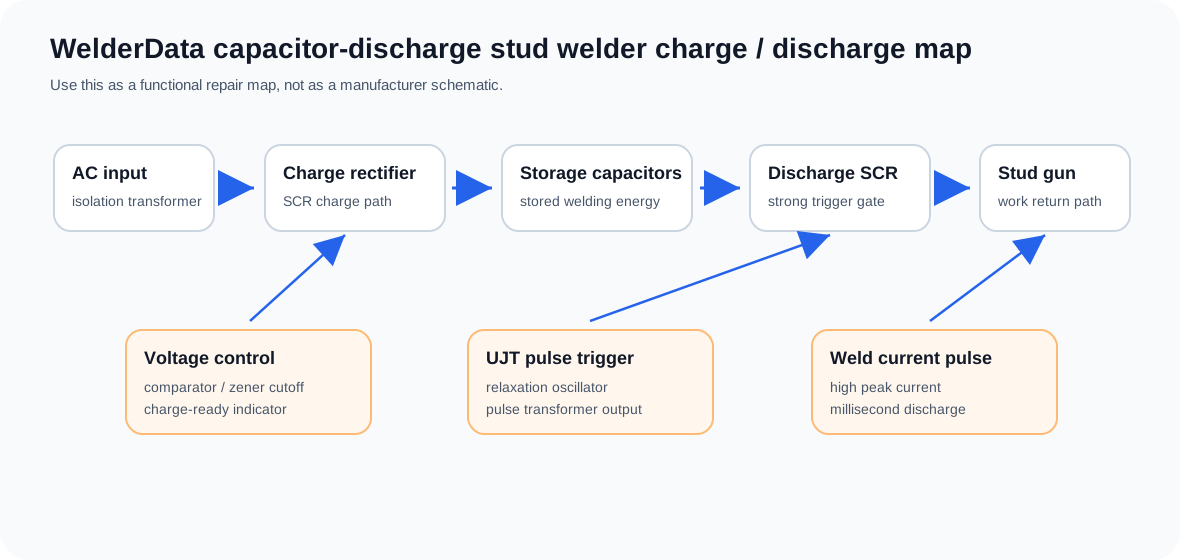
This WelderData circuit reference separates the charging path, capacitor-bank voltage control, trigger pulse generation and high-current discharge SCR path used in capacitor-discharge stud welders.
Database summary
The control sequence is different from an inverter arc welder. The machine first charges the capacitor bank to a selected voltage. When the gun trigger and contact conditions are satisfied, a strong gate pulse turns on the discharge SCR and the capacitor bank releases a short weld pulse through the stud and workpiece.
The most important repair rule is to verify stored-voltage behavior and trigger conditions before replacing the discharge SCR. A failed charge cutoff, weak trigger pulse, damaged gun switch or leaky capacitor bank can mimic a failed SCR.
WelderData charge-discharge map
Charging and trigger checks
| Check | Normal evidence | If abnormal |
|---|---|---|
| Capacitor-bank voltage rises | The bank charges toward the selected value and then stops or stabilizes. | Check charge transformer secondary, rectifier path, charge SCR trigger and charge-control comparator. |
| Charge voltage adjustment | Changing the setting changes the capacitor-bank voltage setpoint. | Check the voltage reference, potentiometer path, sensing divider and cutoff circuit. |
| Charge-ready indication | Ready lamp or relay changes state when the selected voltage is reached. | Check voltage comparator, relay transistor, indicator supply and sensing network. |
| Gun trigger input | Trigger closes only when the stud/work contact and gun switch conditions are correct. | Check gun button, cable, contact interlock, relay contacts and trigger-enable path. |
| Discharge SCR gate pulse | A strong isolated trigger reaches the SCR gate when discharge is commanded. | Check UJT relaxation oscillator, pulse transformer, gate resistor path and trigger relay contacts. |
Discharge SCR replacement cautions
Capacitor-discharge stud welders stress the discharge SCR with a high peak current over a very short duration. The part may not fail under the same duty assumptions used for ordinary phase-controlled rectifiers. WelderData recommends treating replacement as a system repair: capacitor health, trigger strength, heat-sink pressure, stud gun contact and work return must be checked together.
- Do not replace the SCR before confirming the capacitor bank is safely discharged.
- Do not assume no discharge means the SCR is open; weak trigger or failed interlock can produce the same symptom.
- Do not assume poor weld quality is always an SCR issue; charge voltage, capacitance, stud condition and work return matter.