Plasma circuit
KLG-60 Plasma HF Oscillator and Contactor Control
A board-level sequence reference for separating KLG-60 contactor permission, pressure switch, HF spark generation and transferred cutting-arc evidence.
Database summary
This circuit record separates the KLG-60 plasma cutter enable path into control permission, contactor action, high-frequency ignition and transferred cutting arc. It is written for repair routing. It does not replace the exact machine schematic, but it gives the technician a stable sequence to test.
Functional map
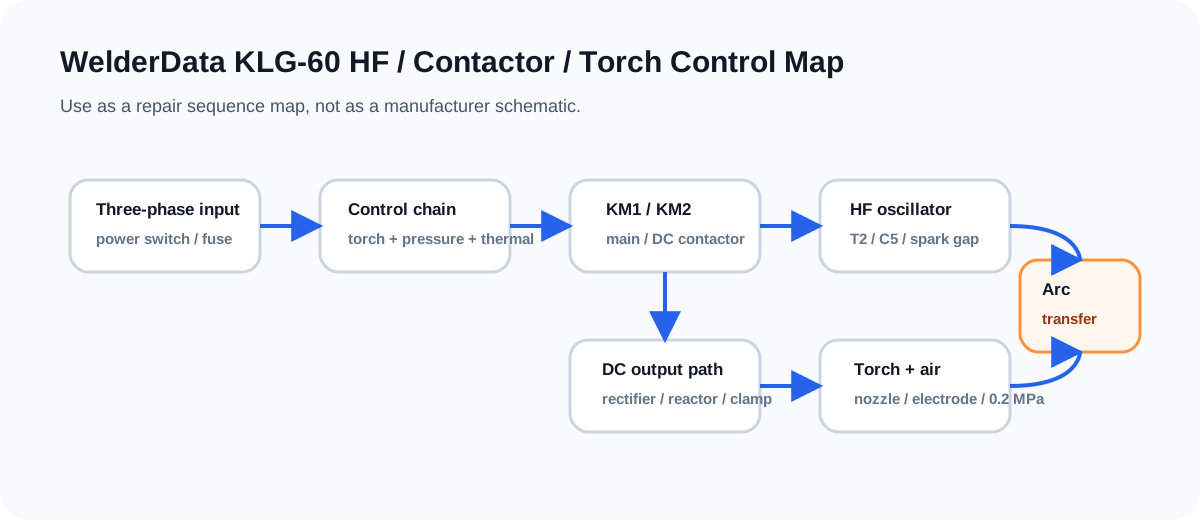
Control-permission chain
| Stage | Evidence to collect | Fault clue |
|---|---|---|
| Input and switch | Three-phase input, power switch, fuse and panel indicator state. | No indicator or no contactor sound should be routed through input/control power first. |
| Pressure controller | Compressed-air pressure reaches the pressure-switch action point; check under actual flow. | Pressure below the action point can prevent the main circuit from enabling. |
| Thermal and safety path | Thermal relay and safety contacts are closed during a cool, normal state. | An open protection path can mimic contactor or PCB failure. |
| Contactor coil path | Coil voltage is present when the torch switch and permission chain are valid. | No coil voltage means upstream control failure; coil voltage with no pull-in means contactor/coil issue. |
HF oscillator path
The high-frequency oscillator is checked only after the contactor/control chain is understood. The KLG-60 platform material points to a high-frequency transformer, high-voltage capacitor, contact path and spark gap as common no-HF checks. A gap around 2–3 mm is useful as a platform reference, but insulation condition and carbon tracking matter as much as the dimension.
| HF item | What to inspect | Repair note |
|---|---|---|
| HF transformer T2 | Open winding, burned insulation, abnormal sound or tracking. | Do not energize repeatedly if insulation is compromised. |
| High-voltage capacitor C5 | Charging path, cracked case, leakage, poor solder or open connection. | No charge can produce no spark even when the control path is active. |
| Spark gap | Clean surfaces, gap around the local reference range, no carbon path. | A gap too large may prevent ignition; a dirty gap may misfire. |
| KM2-1 / contact path | Contact resistance, pitting and loose terminals. | Bad contact can interrupt the HF or DC enable path. |
Arc-transfer interpretation
If HF is present but the torch does not transfer an arc to the workpiece, the HF oscillator is not the first suspect. Check the work clamp, output cable, nozzle/electrode assembly, torch-to-work distance and main output evidence. A burned nozzle or misaligned electrode can prevent stable arc transfer even when the power supply and HF circuit are serviceable.