Circuit
Pulse MIG Current Waveform Control
A WelderData circuit reference for separating pulse setting, waveform generation, current feedback and output-stage evidence in pulse MIG/MAG welders.
Database summary
Pulse MIG control should not be diagnosed as a simple wire-feed fault. A pulse machine can have normal gas, normal wire feed and normal basic welding output while the pulse waveform is missing, fixed, distorted or unstable. The repair path begins by confirming the conventional MIG base system, then checking the pulse command and feedback system.
The useful service distinction is between displayed pulse settings, control-board waveform command, feedback evidence and real arc/output behavior. If the setting changes but the arc does not, the problem may be in waveform generation, feedback, mode selection or output regulation.
WelderData waveform map
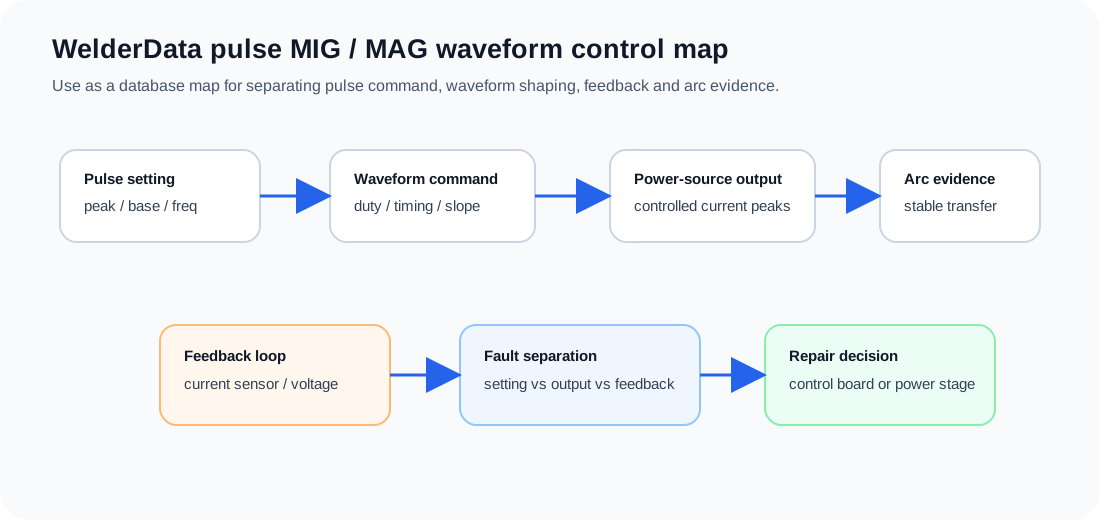
Pulse parameters as repair clues
| Parameter | Normal role | Fault clue |
|---|---|---|
| Peak current | Provides droplet-transfer energy during the high-current part of the cycle. | Arc lacks pulse force, transfer is irregular, or peak command has no effect. |
| Base current | Maintains arc stability between pulses. | Arc extinguishes between pulses or remains too hot during the base period. |
| Pulse frequency | Controls how often the high-current pulse occurs. | Pulse rate fixed, absent, erratic or not following front-panel setting. |
| Duty ratio | Defines the percentage of time spent at peak level. | Heat input too high/low or waveform does not match setting trend. |
| Feedback signal | Allows the control board to regulate the actual output waveform. | Settings appear valid but output waveform or arc evidence is wrong. |
Repair routing
Start from the base MIG system: torch command, gas valve, feeder motor, voltage output and work return. If those are correct, record whether pulse settings change the display, command voltage, feedback signal or actual arc. Do not replace the power stage only because pulse behavior is abnormal; a pulse command, feedback or mode-control problem can produce the same user-visible symptom.