Circuit
ZX7-250 Relay, Boost and High-Voltage DC Bus Enable Path
A WelderData circuit record for the ZX7-250 input path where bridge rectification, relay state, boost routing and the high-voltage DC bus determine whether the inverter board receives power.
Database summary
The relay / DC-bus enable path should be checked before deep PWM diagnosis. A technician may see the fan or low-voltage control section respond, yet the upper inverter board may still be missing the usable high-voltage bus. This creates a no-output repair path that can be mistaken for a control-board problem.
The repair pattern uses a bridge-rectified input stage and relay-controlled bus routing. In 220V operation, the boost path can require both relay actions to produce the expected high-voltage bus. In 380V operation, the relay state and path can differ. For that reason, the repair question is not simply “does the relay click?” but “does the correct bus voltage reach the next board under the correct input mode?”
Functional check map
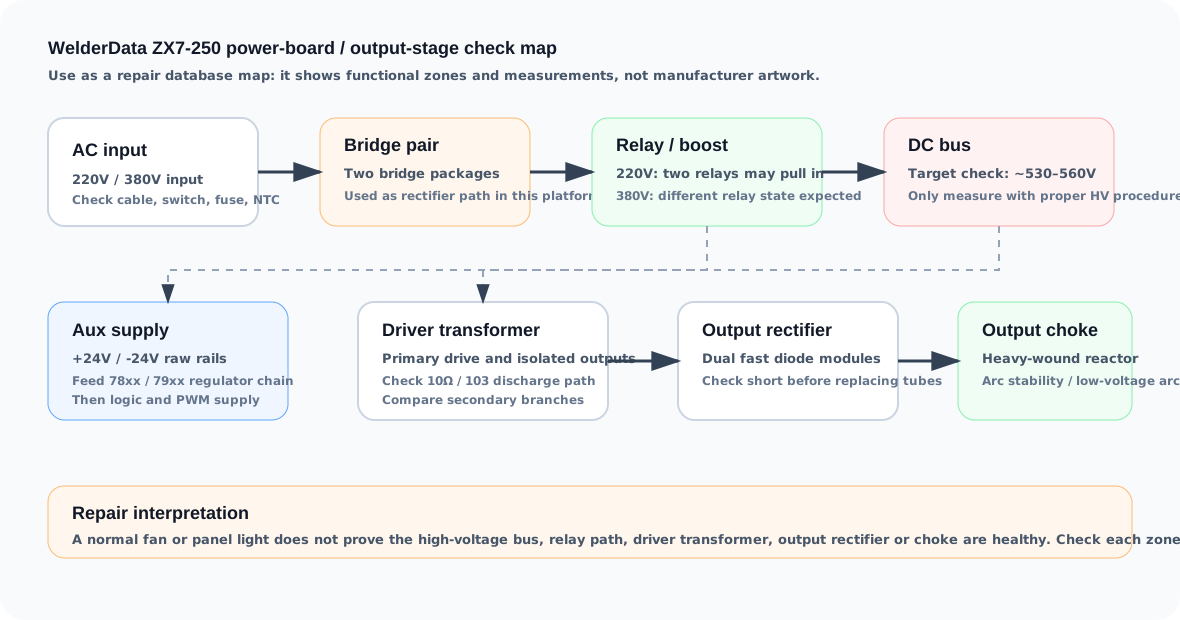
Measurement order
| Check | Expected meaning | If abnormal |
|---|---|---|
| Input bridge diode test | Bridge packages are not shorted and can rectify the input. | A shorted bridge can trip the breaker or keep the lamp limiter bright. |
| Relay coil drive | The control board is commanding the relay under the correct input mode. | Check auxiliary supply, relay driver transistor, connector and mode-detect path. |
| Relay contact path | Closed contacts carry the intended bus path with low resistance. | Clicking without a good contact path can still leave the inverter board dead. |
| DC bus after the relay path | The downstream inverter board receives the expected high-voltage DC. | If missing, stay on power-board diagnosis before moving to PWM or gate drive. |