MIG / MAG arc-process diagnostics
MIG / MAG Arc Process-Control Fault Routing
Route MIG/MAG weld-quality faults through feeder, gas, voltage/current feedback, output reactor and real arc-current evidence.
Database summary
MIG/MAG process-control faults often look like board faults, but the real evidence may be distributed across wire feed, gas, voltage command, current response, output reactor, burn-back timing and feedback.
This workflow is for machines that run but weld poorly: spatter, stubbing, burn-back, unstable transfer, weak arc, harsh arc or process behavior that changes after board repair.
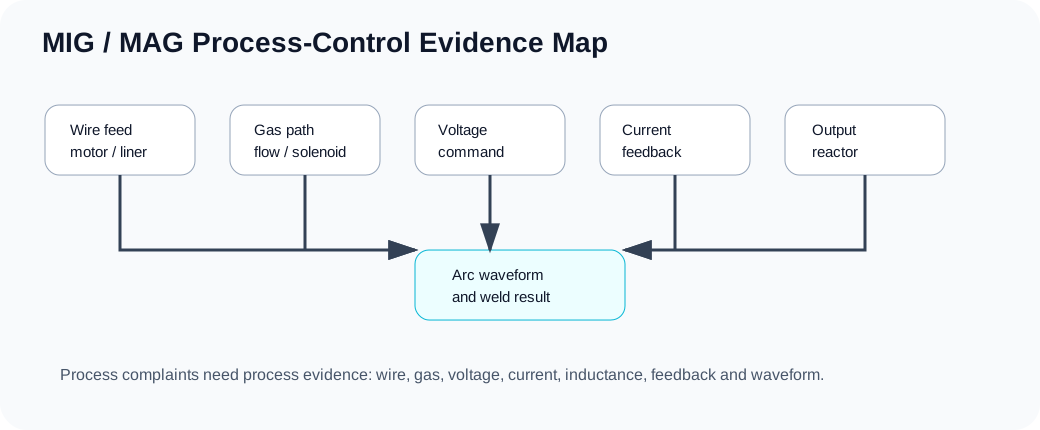
Process-control routing table
| Observed process symptom | Evidence gap | Next repair route |
|---|---|---|
| Wire stubs into the workpiece | Wire-feed speed, voltage command or current rise is mismatched. | Feeder motor, voltage feedback, current loop and output reactor. |
| Wire burns back to the tip | Burn-back timing, voltage control or arc-extinguish timing is wrong. | Torch trigger, burn-back circuit, feeder stop timing and output enable. |
| Large spatter | Short-circuit transfer waveform is unstable. | CO2/MIG waveform diagnosis and output reactor checks. |
| Arc is weak although display is normal | Panel command does not match real loaded current. | Current display vs shunt, PWM response, output rectifier and reactor. |
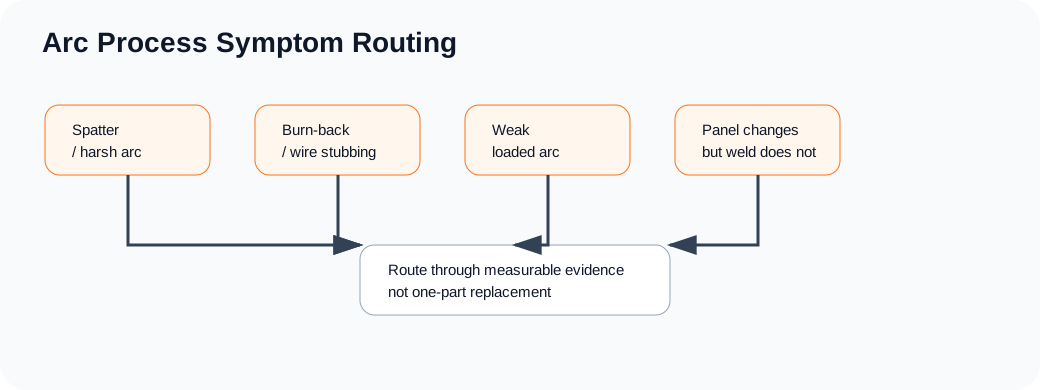
Diagnostic path
| Symptom | Spatter, stubbing, burn-back, unstable short-circuit transfer or weak MIG/MAG arc. |
|---|---|
| Evidence | Wire-feed stability, gas flow, arc voltage/current waveform, output reactor and feedback signals. |
| Circuit section | Feeder control, voltage feedback, current feedback, output rectifier, output reactor and burn-back timing. |
| Next pages | CO2/MIG waveform diagnosis · Output reactor stability · MIG/MAG common routing |