Diagnostic workflow
MIG / MAG Common Fault Routing
A symptom-first WelderData workflow for routing CO2/MIG/MAG welder faults into feeder, gas, voltage-control, contactor, protection or crater-fill sections.
Database summary
This workflow is for gas-shielded wire-feed welders where the first visible complaint may be no wire feed, no gas, no arc, unstable arc, voltage stuck at one end, or abnormal stop. It is intended to route the machine into a section before detailed board repair begins.
Start by recording the torch trigger response, gas solenoid response, motor/jog behavior, panel command behavior, output voltage evidence and protection indication. Those observations are more useful than changing the feeder motor or main board blindly.
WelderData fault routing map
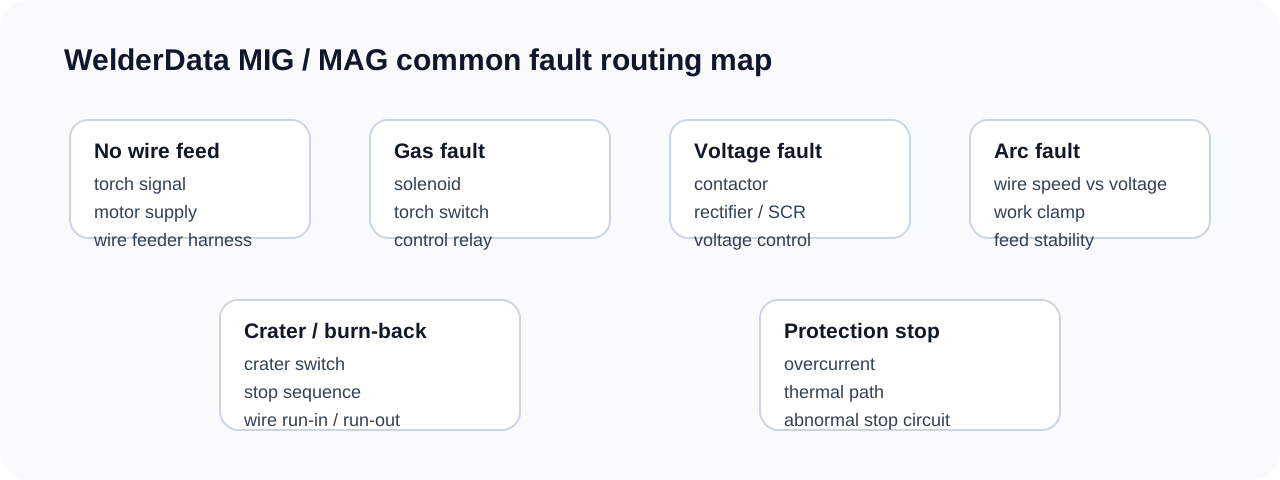
Symptom routing table
| Observed symptom | Likely section | First checks |
|---|---|---|
| No response when torch switch is pressed | Torch trigger, control supply, interlock or main control board | Check trigger continuity, control power and start relay/enable path. |
| Gas works but wire motor does not run | Motor drive, feeder harness or speed command | Check motor supply, motor driver device, wire-speed potentiometer and jog function. |
| Wire feeds but there is no welding arc | Contactor/power-source enable, voltage output or work return | Check contactor, output voltage, work clamp and voltage-control path. |
| Voltage or current stuck at maximum | Command/feedback loop or remote/internal selector | Check control potentiometer, remote socket, feedback line and control amplifier. |
| Arc surges or wire stubs into work | Wire speed / voltage mismatch or feeder instability | Check feed roller tension, motor stability, voltage command and output feedback. |
| Wire sticks or burns back at stop | Crater-fill, burn-back or stop timing | Check stop sequence, crater switch/timer and motor/brake behavior. |
When to use the 6-wire table
If the machine uses a multi-wire feeder control harness and a specific line-loss pattern is suspected, move from this general routing workflow to the CO2/MIG 6-wire fault table. That page is more specific: it maps missing line behavior to gas, motor, jog, current-control and trigger symptoms.
Crater-fill and burn-back routing
| Symptom | Likely section | First checks |
|---|---|---|
| Wire sticks in weld pool at stop | Burn-back or motor-stop timing | Check stop sequence, motor disable timing and whether voltage remains long enough for burn-back. |
| Wire burns back into contact tip | Output remains active too long or wire feed stops too early | Check burn-back timing, feeder motor delay and contactor/output stop command. |
| Crater-fill does not work | Crater-fill command path | Check crater switch/setting, command line and whether feeder/output change during stop sequence. |
| Panel controls do not change feed or voltage | Remote/local interface or feeder harness | Check internal/external selector, feeder plug, command return and 6-wire fault evidence. |
Crater-fill and burn-back routing
| Symptom | Likely section | First checks |
|---|---|---|
| Wire sticks in weld pool at stop | Burn-back or motor-stop timing | Check stop sequence, motor disable timing and whether voltage remains long enough for burn-back. |
| Wire burns back into contact tip | Output remains active too long or wire feed stops too early | Check burn-back timing, feeder motor delay and contactor/output stop command. |
| Crater-fill does not work | Crater-fill command path | Check crater switch/setting, command line and whether feeder/output change during stop sequence. |
| Panel controls do not change feed or voltage | Remote/local interface or feeder harness | Check internal/external selector, feeder plug, command return and 6-wire fault evidence. |
Related pages
Related repair map
Follow the evidence path from symptom to measurement, circuit and repair case.