Diagnostic workflow
Panasonic YC-300WP4 TIG HF and Remote-Control Fault Routing
Workflow for Panasonic YC-300WP4 AC/DC TIG symptoms involving high-frequency start, remote box dependency, SCR checks, output resistance and shunt feedback.
Database summary
This workflow routes YC-300WP4 symptoms where the machine powers on but cannot enter the correct TIG sequence, has no HF, cannot regulate current, only works in crater-fill modes or trips at power-on.
WelderData functional map
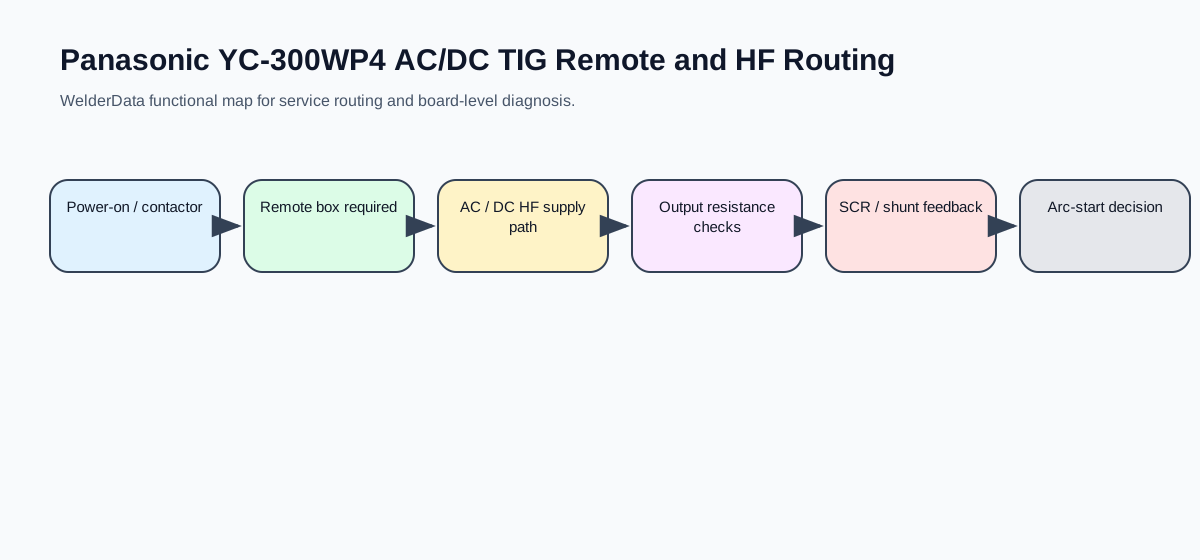
Workflow table
| Symptom | Check | Likely route |
|---|---|---|
| Breaker trips or machine sound is abnormal at power-on. | Measure output-terminal resistance and SCR gate-cathode resistance. | SCR or SCR module damage is likely; also inspect AC/DC key switch and buffer P-board after replacement. |
| No HF when torch switch is pressed. | Confirm air/water cooling selector, water pressure, torch-switch cable, HF fuse and external input voltage. | Then separate P-board fault from HF transformer / C5 / spark-gap fault. |
| AC mode has no HF. | Remove HF fuse and check output voltage near 80V; inspect AC/DC switch, TIG/stick switch, C5, TR2 and SG. | AC HF supply path may be output-source related. |
| DC mode has no HF. | Short line 23 to 25 under controlled conditions. | HF appears: P-board fault; HF absent: HF circuit fault. |
| HF exists but arc does not start. | Check work return, torch insulation leakage, output terminal shorts to chassis and torch resistance. | Do not replace P-board before verifying output and HF leakage paths. |
| Only crater-fill / repeat position can start. | Remote box not installed or remote cable open. | Remote-control dependency is a primary check. |
| Current cannot be increased. | P-board, shunt overheating/oxidation, SCR module or potentiometer path. | Separate command fault from feedback fault. |
Special service notes
- Arc blow and scattered small-current arcs can be caused by work return position or oversized tungsten, not only by electronics.
- Fast tungsten consumption in AC welding can come from tungsten material, too-small tungsten, insufficient gas or excessive cleaning width.
- CR3 burn on the P-board can be caused by torch-switch control line shorting to the output cable; repair the short, not only the relay.