Model reference
AC Transformer Arc Welders Repair Reference
A WelderData model-family reference for traditional AC transformer welders, focused on no-output, weak-output, overheating, abnormal hum and current-adjustment faults.
Database summary
AC transformer arc welders are traditional welding power sources built around a mains-frequency transformer. Welding current is adjusted by tap switching, movable magnetic shunts, movable cores, reactor sections or other magnetic current-control methods rather than by an inverter control board.
This WelderData page is focused on repair routing. The goal is to separate line-input faults, transformer winding faults, current-control mechanical faults, secondary-output losses and welding-cable problems before a heavy transformer or current-control assembly is condemned.
Functional map
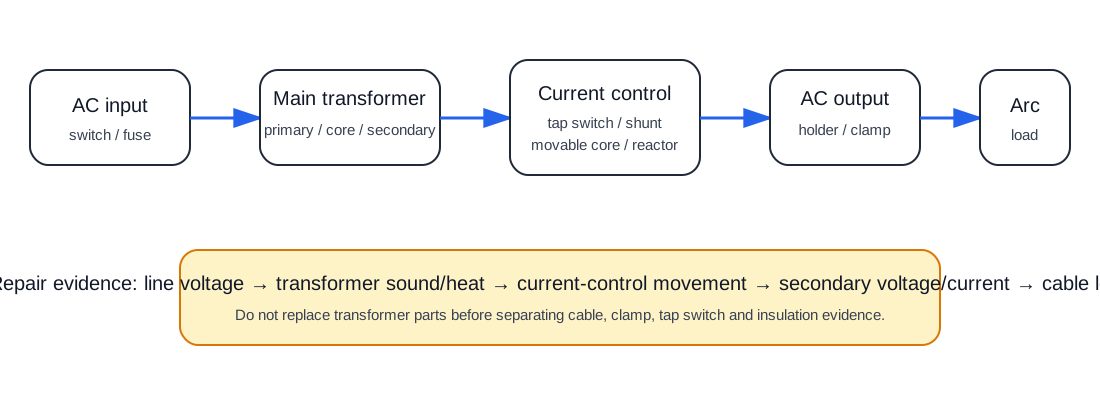
Main repair sections
| Section | Evidence to collect | Repair meaning |
|---|---|---|
| Line input and switch | Plug, switch, fuse, terminal block, loose connections, voltage under load. | No hum or intermittent output may be an input path problem rather than a transformer failure. |
| Main transformer | Abnormal hum, overheating, insulation smell, winding continuity, primary/secondary separation. | Transformer evidence should be checked only after obvious cable and input faults are excluded. |
| Current adjustment | Tap-switch position, contact heating, movable core/shunt movement, linkage and scale position. | Weak current or current not adjustable is often a mechanical/contact issue in older machines. |
| Secondary output | Holder, work clamp, cable cross-section, overheated terminals and secondary voltage/current evidence. | High cable loss can mimic a weak transformer or poor current regulation. |
| Cooling and insulation | Fan if present, blocked vents, dust, damp insulation and leakage evidence. | Overheating or leakage must be treated as a stop condition before load testing. |