Circuit reference
Resistance Welder Transformer, Timer and Pressure Control
A WelderData circuit reference for separating transformer current, timer output, pressure timing, electrode contact and cooling evidence in resistance welding machines.
Database summary
A resistance welder is not diagnosed like a constant-current arc welder. The transformer and secondary circuit create the weld current, while the timer and pressure system decide when current is applied and whether the joint is squeezed correctly. A bad weld can therefore be electrical, mechanical, thermal or process-related.
Functional map
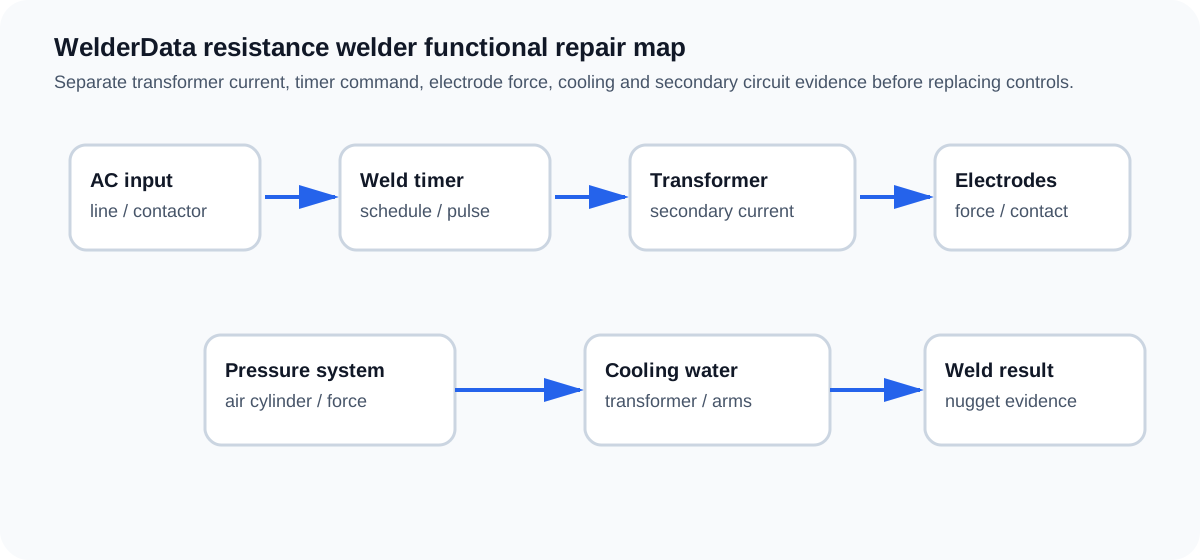
Control sections
| Section | Role | Repair evidence |
|---|---|---|
| Input / contactor | Applies line power to the welding transformer. | Input phase, contactor coil, safety interlocks and line drop under weld demand. |
| Weld timer / schedule | Controls squeeze, weld and hold timing. | Timer output, sequence relay/solid-state output and timing response. |
| Transformer | Provides high secondary current at low voltage. | Primary energization, secondary current evidence, heat and insulation condition. |
| Secondary circuit | Carries high weld current to the electrodes. | Arms, cables, holders, shunts, wheel assemblies and loose joints. |
| Pressure system | Applies electrode force before and during current flow. | Air pressure, cylinder movement, squeeze delay, electrode alignment and force stability. |
| Cooling system | Protects transformer, electrodes and arms from overheating. | Water flow, blocked passages, temperature rise and duty-cycle evidence. |
Timer / pressure / current separation
| Observation | First interpretation | Next check |
|---|---|---|
| Electrodes close but no weld mark appears | Pressure command exists, but weld current may not be delivered. | Timer weld output, contactor/SCR output, transformer primary and secondary current path. |
| Current fires before full squeeze | Schedule or squeeze timing may be wrong. | Squeeze time, cylinder speed, pressure switch and timer contacts. |
| Heavy expulsion at start | Excess current, poor force or dirty contact surface. | Pressure, electrode face, work fit-up and current schedule. |
| Weak weld with correct timer setting | Current may be lost in the secondary path or pressure/contact may be wrong. | Secondary joints, electrode wear, cable heat and transformer output. |