Model reference
Resistance Welding Machines Repair Reference
A WelderData machine-family hub for spot welders, seam welders, projection welders and butt welders, focused on transformer current, timer control, electrode force, cooling and weld-quality fault evidence.
Database summary
Resistance welding machines join metal by passing high current through a contact area while electrode force is applied. The practical repair path is different from inverter arc welders: weak welds, expulsion, electrode sticking or missing weld current may be caused by transformer current, timer command, electrode pressure, electrode condition, secondary-circuit loss, cooling or workpiece fit-up.
WelderData treats this family as a machine-type hub for spot welders, seam welders, projection welders and butt welders. The goal is not to provide a welding procedure chart, but to help technicians separate electrical, mechanical, cooling and contact-resistance evidence before replacing the timer or transformer.
Functional map
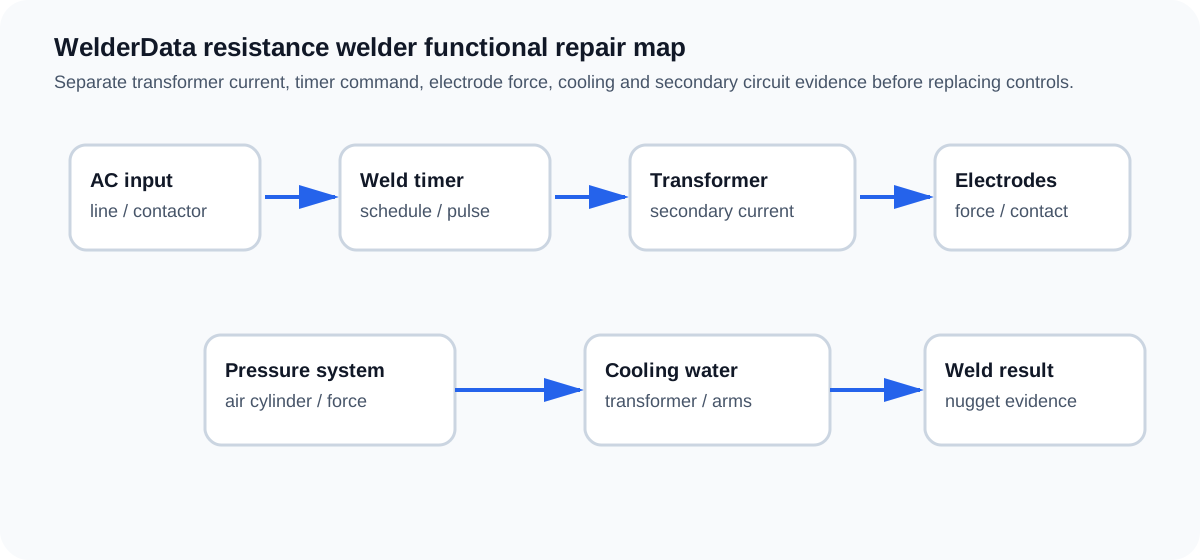
Machine families
| Family | Typical use | Repair focus |
|---|---|---|
| Spot welder | Overlapped sheet or small assemblies. | Electrode pressure, weld time, secondary current, electrode wear and cooling. |
| Seam welder | Continuous or intermittent seam welds using wheel electrodes. | Wheel contact, rotation drive, current timing and water cooling. |
| Projection welder | Parts with raised projections or localized contact points. | Projection collapse, electrode alignment, pressure timing and current schedule. |
| Butt / flash butt welder | End-to-end joining of bars, rods or profiles. | Clamping, upset force, transformer output, timing and contact condition. |
What to record first
| Evidence | Why it matters | Do not confuse with |
|---|---|---|
| Weld nugget / mark | Shows whether current, pressure and time reached the joint. | Timer fault alone. |
| Electrode face condition | Mushroomed, oxidized or misaligned electrodes change contact resistance. | Transformer weakness. |
| Secondary current path | Loose arms, cables, holders and shunts waste current. | Control-board no-output. |
| Air pressure / force | Low or late force can cause expulsion, sticking or weak welds. | Bad weld schedule. |
| Cooling water | Overheated electrodes and transformer cause unstable welds and damage. | Incorrect timer setting. |