Diagnostic workflow
Resistance Spot, Seam and Projection Welder Fault Routing
A symptom-first workflow for resistance welding faults: no weld current, weak welds, expulsion, electrode sticking, overheating and irregular seam or projection weld behavior.
Why this workflow exists
Resistance welding faults are often misread as transformer or timer failures. In practice, the same symptom may come from electrode wear, secondary-circuit loss, low pressure, wrong squeeze/weld/hold timing, cooling failure or workpiece fit-up. This workflow turns those symptoms into a repair record.
Fault routing map
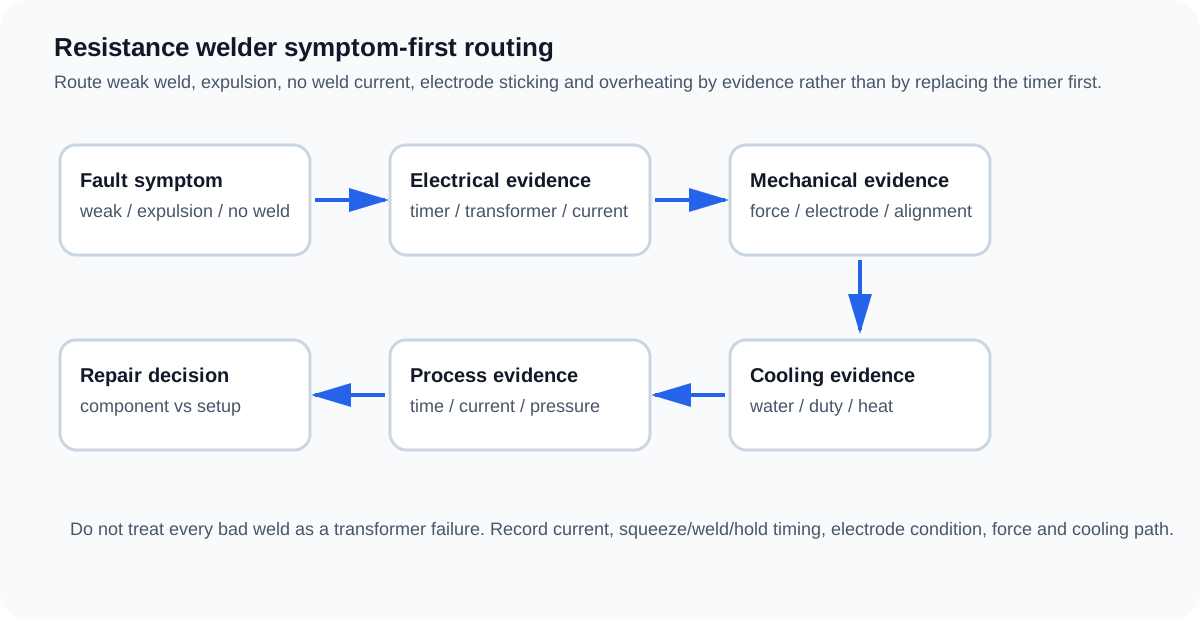
Symptom-first routing table
| Symptom | First checks | Likely area | Repair note |
|---|---|---|---|
| No weld current | Timer weld output, contactor/SCR output, transformer primary, secondary connection. | Electrical power path. | Confirm current delivery before changing electrodes or pressure settings. |
| Weak weld / small nugget | Electrode face, pressure, weld time/current, secondary cable heat, workpiece fit-up. | Current loss, low pressure or bad contact. | Do not assume transformer weakness without secondary-path evidence. |
| Excessive expulsion / splash | Electrode force, current setting, squeeze time, surface contamination and alignment. | Pressure/timing/current mismatch. | Expulsion can be process evidence, not only an electrical fault. |
| Electrode sticks to work | Hold time, electrode cooling, surface condition, pressure release timing. | Thermal/contact/timing issue. | Check cooling and electrode face before changing the timer. |
| Overheating transformer or arms | Cooling water, duty cycle, loose secondary joints, contact resistance. | Cooling or high-resistance secondary path. | Inspect hot joints and blocked cooling passages. |
| Seam weld is intermittent or uneven | Wheel electrode condition, rotation drive, timing pulses, pressure stability. | Seam wheel / timer / pressure path. | Record wheel contact and pulse pattern together. |
| Projection weld collapses poorly | Projection shape, pressure timing, current schedule and electrode alignment. | Mechanical setup or schedule mismatch. | Compare part geometry before board repair. |
Repair record template
| Record field | What to write down |
|---|---|
| Machine type | Spot, seam, projection, butt or mixed resistance welder. |
| Symptom | No current, weak weld, expulsion, sticking, overheating or irregular seam. |
| Timer evidence | Squeeze, weld and hold timing; whether the weld command reaches the power path. |
| Electrical evidence | Input, contactor/SCR, transformer primary, secondary current and hot connections. |
| Mechanical evidence | Electrode force, alignment, face condition, workpiece contact and clamping. |
| Cooling evidence | Water flow, blocked passages, overheated arms/electrodes and duty cycle. |
| Repair decision | Setup correction, electrode service, secondary path repair, timer/control repair or transformer repair. |