Diagnostic workflow
Rectifier Arc Welder Common Fault Routing
A WelderData diagnostic workflow for ZXG / ZX5 style transformer rectifier arc welders: no power, no output, weak output, current not adjustable, overheating and unstable arc faults.
Why this workflow exists
Public web results for older rectifier welders are often scattered between product pages, manuals, generic troubleshooting articles and videos. Some pages identify ZXG silicon rectifier machines or DC thyristor rectifier welders, but there are fewer structured diagnostic pages that move from symptom to transformer, rectifier, SCR trigger, reactor and output-cable evidence. WelderData treats this as a repair workflow rather than a product description.
Fault routing map
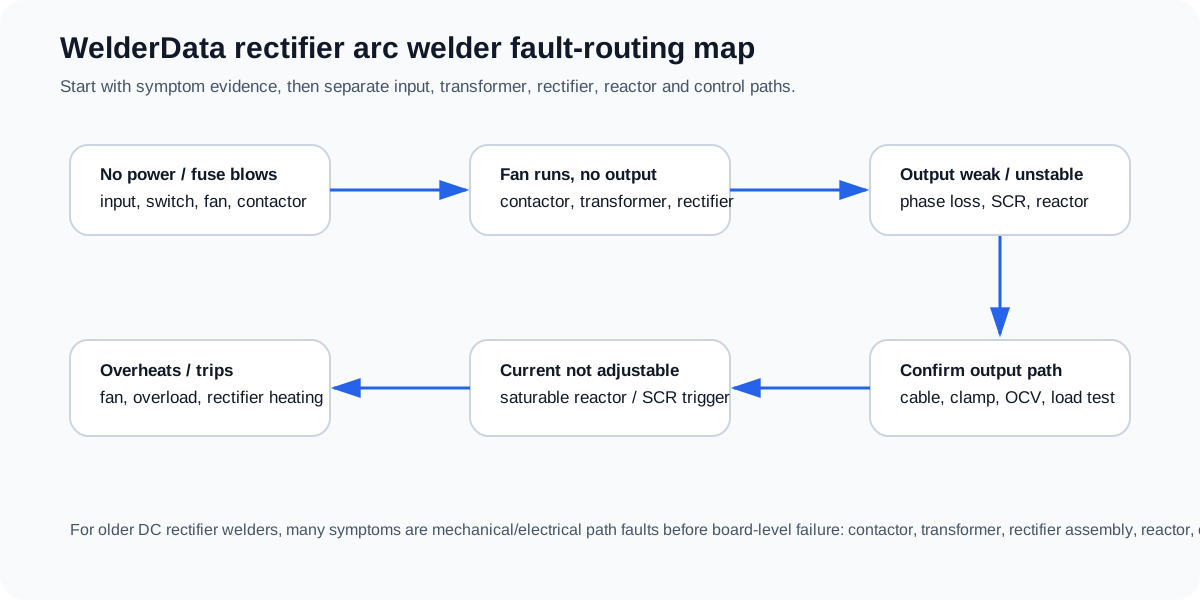
Symptom-first routing table
| Symptom | First evidence | Likely area | Next check |
|---|---|---|---|
| Power switch on, no indicator / no fan | Input voltage, fuse, switch, contactor coil and auxiliary transformer if present. | Input / startup path. | Do not open the output section until the input path is confirmed. |
| Fan or contactor works, no welding output | Transformer secondary AC, rectifier DC output and output cable continuity. | Transformer, rectifier assembly, SCR trigger or output path. | Separate fixed diode rectifier from thyristor trigger fault. |
| Output weak or arc unstable | Input phase, secondary balance, diode/SCR condition, reactor and clamp/cable voltage drop. | Phase/input, rectifier, reactor or output connection. | Confirm real output under load before changing boards. |
| Current cannot be adjusted | Current knob/command, trigger board, feedback path and SCR firing response. | Control path or thyristor phase-control circuit. | On ZX5-type machines, check trigger/control before replacing SCRs. |
| Fuse blows / breaker trips | Power-off resistance checks: input path, transformer primary, rectifier short, output cable short. | Shorted rectifier, transformer fault or output short. | Keep output disconnected until the short is separated safely. |
| Overheats quickly | Fan, duty cycle, blocked airflow, rectifier heat sink, reactor heating and loose bolted devices. | Thermal path, overload use or device mounting. | Do not treat thermal shutdown as only a sensor fault. |
Minimum measurement record
| Record field | What to write | Why it matters |
|---|---|---|
| Machine type | AC transformer, silicon rectifier DC, or thyristor rectifier DC. | The repair route changes by output-control method. |
| Input state | Line voltage, fuse/breaker, switch and contactor result. | Prevents false output-side diagnosis. |
| Transformer evidence | Primary energized, secondary AC present, heating/noise/smell. | Separates transformer path from rectifier path. |
| Rectifier evidence | Diode/SCR short/open, heat-sink condition and output DC result. | Identifies fixed rectifier or controlled rectifier faults. |
| Control evidence | Current command, trigger response, feedback/protection condition. | Needed especially for ZX5 thyristor machines. |
| Output evidence | Cable, clamp, reactor, OCV and load behavior. | Prevents board replacement for cable/return faults. |