Model reference
ZXG-300 Silicon Rectifier Arc Welder Repair Reference
A WelderData reference for ZXG-300 style silicon rectifier DC arc welders, focusing on transformer output, rectifier assemblies, reactor/output paths and practical no-output or weak-arc diagnosis.
Database summary
ZXG-300 style welders belong to the older transformer rectifier family. They are not high-frequency inverter machines. Their repair path usually begins with the AC input, primary switch, main transformer, rectifier diode assembly, output reactor and welding cable path. Because the control structure is simpler than a PWM inverter, many faults should be separated by power-path evidence before replacing components.
This page is useful when a machine powers on but has no welding output, produces weak DC output, overheats, blows fuses or has unstable arc behavior. Use it as a model-family reference, then move to the rectifier fault routing page for symptom-level checks.
Functional power path
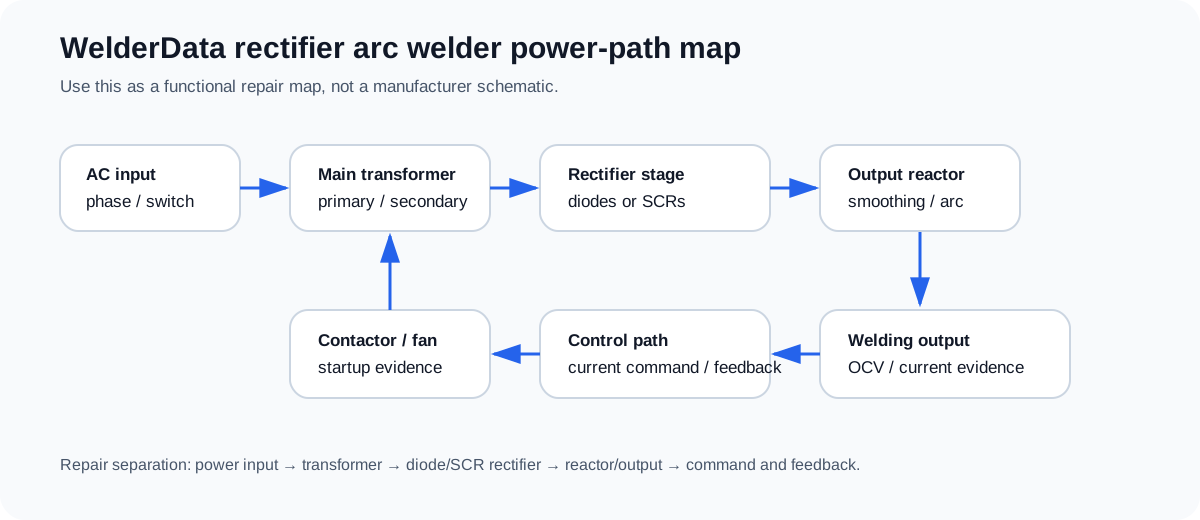
Main sections to separate
| Section | Role | Repair evidence |
|---|---|---|
| Input switch and primary wiring | Feeds the main transformer and auxiliary devices. | Input voltage, fuse state, switch continuity, loose terminals and burnt connectors. |
| Main transformer | Steps down welding power before rectification. | Primary energization, secondary AC presence, abnormal heating, hum or insulation smell. |
| Silicon rectifier assembly | Converts transformer secondary AC to DC welding output. | Diode short/open, heat sink condition, loose bolted diodes, asymmetric diode-mode readings. |
| Output reactor / choke | Smooths output and supports arc stability. | Loose terminals, heating, open winding, abnormal vibration or arc instability. |
| Output cable and clamp | Completes the welding circuit. | Clamp contact, cable break, overheated connector and voltage drop under load. |
Typical ZXG-300 symptoms
| Symptom | First check | Common interpretation |
|---|---|---|
| Power switch on, no welding output | Confirm input, transformer secondary and rectifier output. | Open primary path, transformer fault, rectifier assembly fault or output cable fault. |
| Weak output / unstable arc | Check phase/input condition, rectifier diodes, reactor and output connections. | Open diode, loose rectifier connection, reactor/output path issue or poor clamp contact. |
| Fuse blows or input trips | Separate input short, transformer primary, rectifier short and output cable short. | A shorted diode or shorted transformer path must be cleared before energizing again. |
| Machine heats quickly | Check fan/airflow, overload use, diode heat-sink mounting and reactor heating. | Thermal symptoms can be load-related or rectifier-assembly related. |