Model family
NSA4-300 / NSA-300 DC TIG Welders
A WelderData model-family reference for DC TIG service routing, focused on torch, gas, current command, DC output and maintenance evidence.
Database summary
NSA4-300 / NSA-300 style DC TIG welders are treated as older DC tungsten-arc platforms where torch hardware, shielding gas, current command, output section and maintenance condition must be separated. The value of this reference is not general TIG technique; it is the service path from no gas, no arc, unstable DC TIG current or pulse-control complaint toward a measured repair decision.
WelderData TIG service map
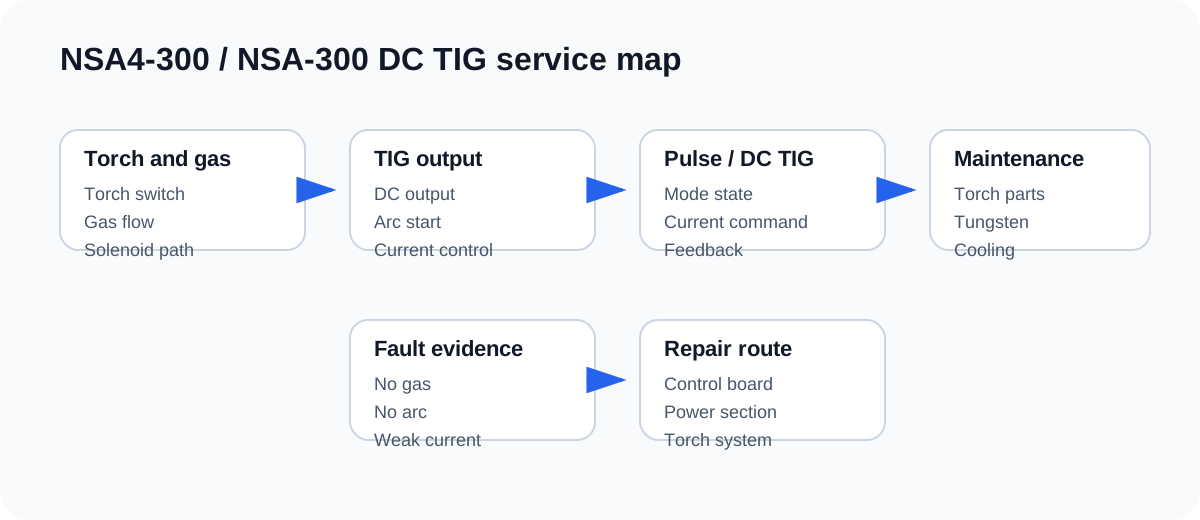
Service areas to separate
| Area | Repair question | What to record |
|---|---|---|
| Torch and gas | Does the torch switch command gas and output enable correctly? | Torch switch continuity, gas valve response, gas flow evidence and connector state. |
| Arc start and DC output | Does the machine produce a usable DC TIG output after start? | Open-circuit evidence, output terminal condition, work-return state and current response. |
| Pulse / current command | If pulse or current control is present, does the command change output behavior? | Panel setting response, current feedback evidence and mode switch state. |
| Torch consumables | Can a bad tungsten, torch insulation or gas path mimic an electrical fault? | Tungsten condition, ceramic/nozzle state, cable damage and water/air cooling status if applicable. |
Common routing examples
| Symptom | Likely first section | Do not conclude too early |
|---|---|---|
| No shielding gas | Torch switch, gas solenoid, control supply or gas path | Do not replace the output power section before confirming the gas command. |
| Gas works but no arc | Output enable, current command, work return or arc-start circuit | Do not assume the torch is bad if the output path has not been checked. |
| Arc starts but current is unstable | Current command, feedback loop, output cable or torch consumable condition | Do not treat every unstable TIG arc as a main transformer or power-device fault. |
| Pulse behavior absent or weak | Pulse command path, current feedback and mode control | Separate base DC TIG output from pulse-control failure. |